16 July 2026 · Bruce Hearder · 7 min read
reading-the-groundThe 4 Unwritten Laws of Gold Prospecting in Western Australia

You can spend four grand on the best detector in the country, drive six hours out to the goldfields, and swing all weekend, then go home with nothing but a sunburn and a bucket of shotgun pellets and old nails.
And here's the part that stings. The guy who pulled gold out of that same ground wasn't luckier than you. He wasn't better on the machine than you. He just followed four rules, and you didn't, probably because nobody ever told you they existed.
Most people reckon finding gold is about the gear, or a good day. It's actually decided long before you switch the detector on. Get these four rules right and you're a completely different prospector. Get them wrong, and it genuinely does not matter what you're swinging.
Now, when I say "laws," I'm not talking legislation (I'm not going to bore you with the Mining Act today, don't worry). I mean the things that hold true every single time, on every trip, for every prospector I've ever seen consistently find gold: the fundamentals, the non-negotiables. And a couple of them are genuinely non-obvious, not what you'd think of first.
Law 1: Go where gold has already been found
Some of you are thinking, that's obvious. But the way most beginners actually pick their spot tells me they don't really believe it.
Gold didn't scatter itself randomly across the state. It formed in specific geological events hundreds of millions of years ago, and it's been sitting in roughly the same places ever since. So the single most reliable predictor of where gold is today is where gold has already been found. WA has well over a century of recorded production to draw on, a mountain of information just sitting there waiting for you to use it.
So before you go anywhere, check the historical record for that ground: old tenements (the legal mining leases people have held over that patch), old shafts, mullock heaps (the piles of waste rock the old-timers dug out), soil sample anomalies, drilling results. Follow the trail the prospectors before you already left.
If you're not sure how to find any of that, it's exactly what I built GoldProspectingWA.com for: tenement maps, historical gold occurrences and geochem, all in one place.
The mistake I see constantly? People pick a spot because it looks good on Google Earth. But scenic country is not the same as productive country. The landscape doesn't tell you where the gold is. The data does.
Law 2: Your detector finds metal. Your brain finds gold.
Law One is where you go. Law Two is about why the gold is there, and this is where I watch beginners leave the most gold in the groundwithout ever knowing it.
A metal detector is a confirmation tool. It confirms what your research already told you to expect. It is not a magic wand you wave over random dirt hoping something yellow beeps. Treat it like a wand, and you get wand results.
Gold in WA almost always sits with specific rock types and specific structures. You'll hear me say greenstones a lot: the old, chewed-upvolcanic and sedimentary rocks that host most of our gold out in the Yilgarn. Especially the mafic volcanics (dark, iron-and-magnesium-rich old lava flows) and the banded iron formation, those striped iron-rich beds. Then the structures: shear zones, where the rock's beenground and cracked by movement, fold hinges, and contacts, where two different rock types meet. That's where the gold-bearing fluids travelled. That's where the gold got dropped.
I'm not saying you need a geology degree. But if you can look at a geology map and pick the greenstone belt from the granite, you'realready ahead of most recreational prospectors in this state. That one skill narrows your search from a whole region down to a target.
The mistake here is spending hours, sometimes a whole day, gridding ground that has no geological reason to hold gold. Diligent detecting, just diligent in the wrong place. A bit of map reading at the kitchen table fixes that completely.
Law 3: Cover your ground properly. Every time.
This one's unglamorous. Honestly, it's the most boring thing in this whole article. But in my experience it costs people more gold thaneverything else on this list combined.
Nuggets in WA can be tiny, sub-gram, smaller than a grain of rice. For your detector to reliably hit that, the coil has to pass within a few centimetres of it, at the right height, at the right speed. In my experience, most beginners cover maybe half the ground they thinkthey're covering.
So use markers: stakes, rocks, scuff marks in the dirt, anything to define a real grid. Overlap each swing by at least a third of your coil width. Walk slow enough that the detector can actually process the signal. If you're clearing 100 square metres in ten minutes, you'regoing way too fast. Done properly on good ground, that patch might take you thirty or forty minutes.
And keep that coil low. A coil bouncing ten or fifteen centimetres off the deck loses serious depth on small targets. It's not exciting, and nobody makes a highlight reel of a person walking slowly in straight lines.
The mistake I call random walking: you detect the interesting-looking bits and skip the boring stuff. Around old shafts, along the creekedge, around the visible quartz, all good instincts. But then you skip the flat, featureless ground in between, and you don't know which bit is interesting until the detector tells you. So cover it all. Let the machine make that call, not your eyes.
Law 4: Everything your detector tells you is data
The first three laws are all about finding gold. This last one's different. It's about getting smarter every time you go out, so every trip feeds the next one. And it's the one almost nobody talks about.
Everything your detector tells you is data, not just the gold signals.
Every target you dig (nugget, boot tack, rusty wire) is information about that ground. The good prospectors are reading it constantly. Is the trash density telling me this patch has been flogged by detectorists before me? Is the ironstone I'm digging consistent with aproductive laterite profile, that weathered, iron-rich surface layer that often sits over gold? Is the signal character of the ground changing under me, and should I be paying attention?
The detector is talking to you the whole time. The only question is whether you're listening to all of it, or just the beeps that turn outto be gold.
So keep a simple log. Notes on your phone is plenty: trash per hour, rock types you're working through, where the ground changes. And when you do find gold, work backwards. What did the ground look like in the fifty metres before the find? What did you nearly walk past? Thatpattern is gold in itself, the thing you want to recognise next trip. That's how one good day compounds into a good year.
The mistake is writing signals off before you dig them. After 200 pieces of rusty wire, believe me, I get the temptation. But in mineralised country the signal from trash and the signal from small gold can overlap. My rule's always been: if you're on ground wheregold's been found before, and the signal repeats cleanly, dig it. A boot tack costs you two minutes. Walking past a two-gram nugget costs you the whole trip.
The four laws, together
Go where gold's already been found. Understand the geology well enough to know why it's there. Cover your ground properly. And listen to everything the detector tells you, not just the pretty signals.
None of this guarantees gold. I'll be straight with you — nothing does. But all four together? You're not the clown who drove out and started swinging randomly anymore. You're the prospector who found gold on ground the first guy gave up on.
And it all starts with knowing where to go — the right history, the right geology, the legal access. That's what GoldProspectingWA.com is for: tenement maps, historical gold occurrences, soil anomalies and drilling results, all in one place. Have a look before your next trip — and be honest with yourself about which of the four laws you've been breaking without realising it. I did it for years myself.
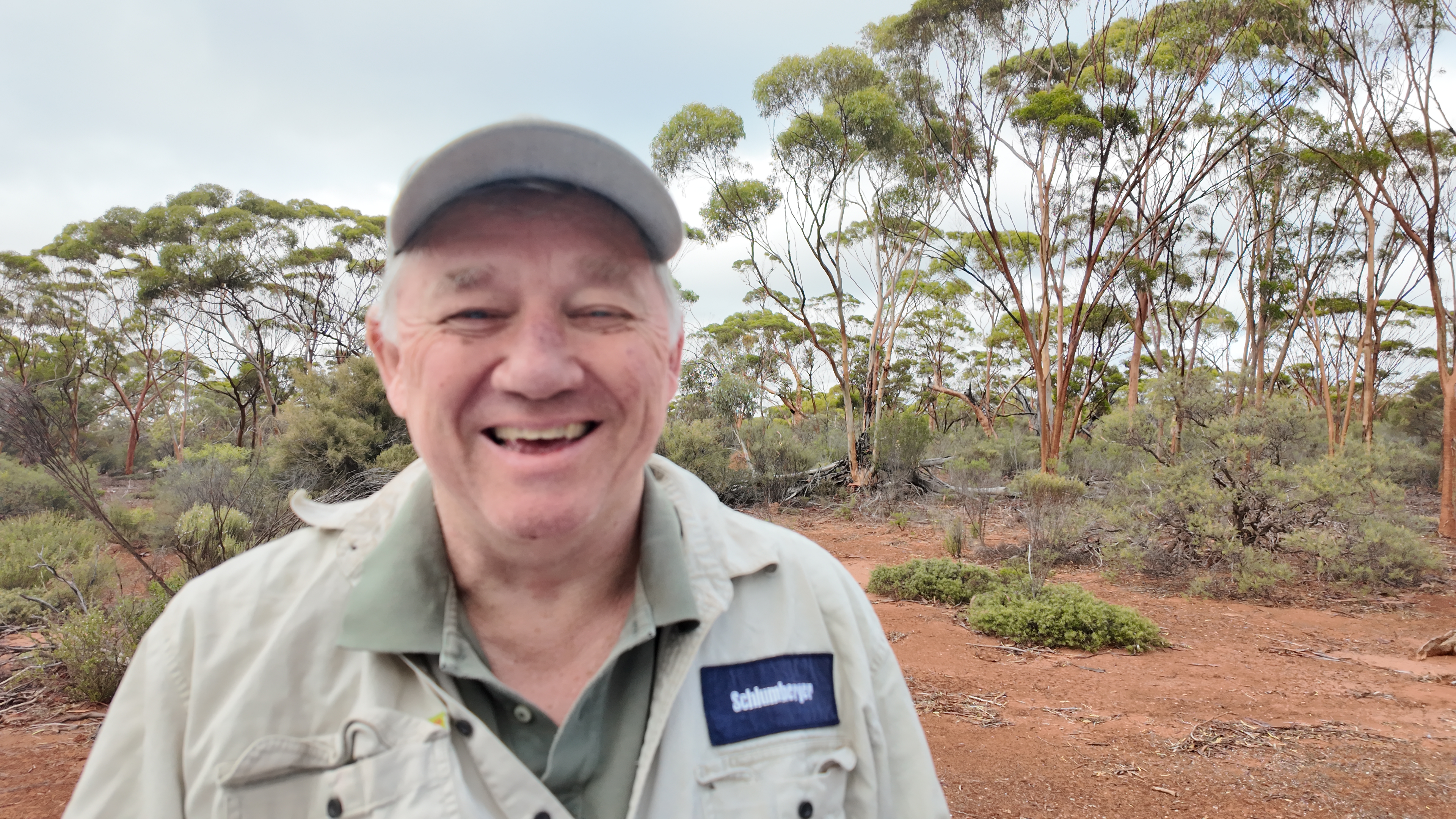
Former exploration geologist with 10 years of professional gold exploration in Western Australia and nearly 35 years as a recreational prospector. Read his full story →